This allows for the stable detection of glossy aluminum vapor deposition packaging—simply install the Sensor directly abov
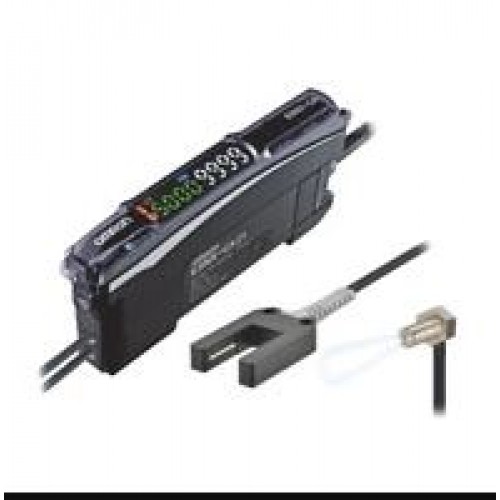
Smart Fiber Amplifier Units with White LEDs. High Color Discrimination Capability with the Same Easy Operation as Previous Fiber Amplifier Units. Existing General-purpose Fiber Units Can Be Connected.  Item list of E3NX-CA
Light Is Received over a Wide Range: Enough Even for Glossy Packaging
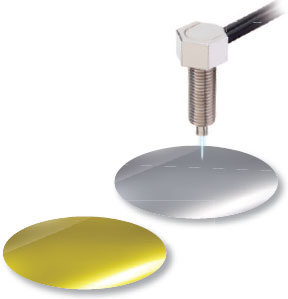
No Saturation Even with 99% Reflective Optical Mirrors High Dynamic Range (Wide Incident Light Range)
The optimal light intensity—with just two button presses
The high luminance white LED and Smart Noise Reduction technology work together to increase the light intensity and reduce the amount of noise. These have made it possible to expand the light intensity adjustment range for the emitter and receiver to 1/100x and 1/3x respectively, resulting in a high dynamic range four times that of conventional products.
You can automatically adjust the optimal intensity by just pressing a button once with a mark and once without it.
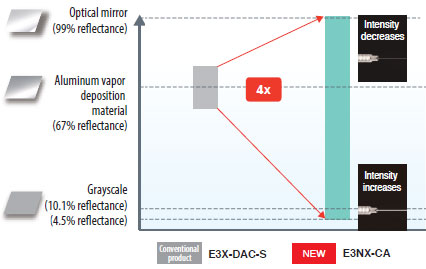
* Optical mirror and aluminum vapor deposition material measured at the distance with maximum incident level (13 mm);
grayscale measured at the distance with minimum incident level (7 mm or 13 mm).
grayscale measured at the distance with minimum incident level (7 mm or 13 mm).
Provides a High S/N Ratio to Detect Subtle Color Differences
Stable detection even of similar colors with only minor differences
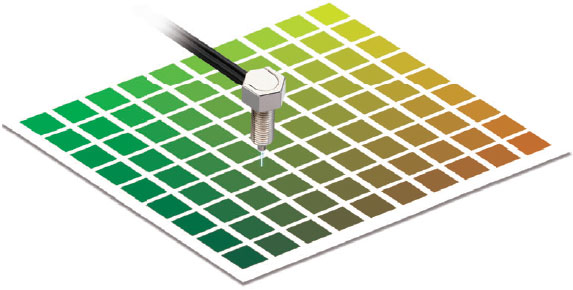
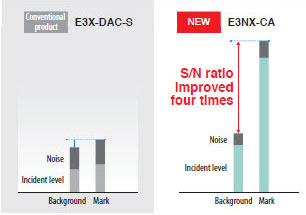
Identifies Even Minor Color Differences High S/N Ratio System Design
Three N-Smart Technologies Work Together to Obtain a High S/N Ratio
The high luminance white LED of the Fiber Amplifier Unit, and the high luminance RGB three-color LEDs and high efficiency optical system design of the Photoelectric Sensor deliver high power. "Smart Noise Reduction" (a light reception algorithm) and "N-Core" (a high-speed, high-precision IC) work together to dramatically reduce the effect of noise. Increasing the incident level and decreasing noise make it possible to obtain a high S/N ratio even when color differences are subtle.
Visualization of Variation in Colors Printed on Packaging Makes Troubleshooting Easier
Allowing support of packaging printing color variation, and helping to reduce downtime
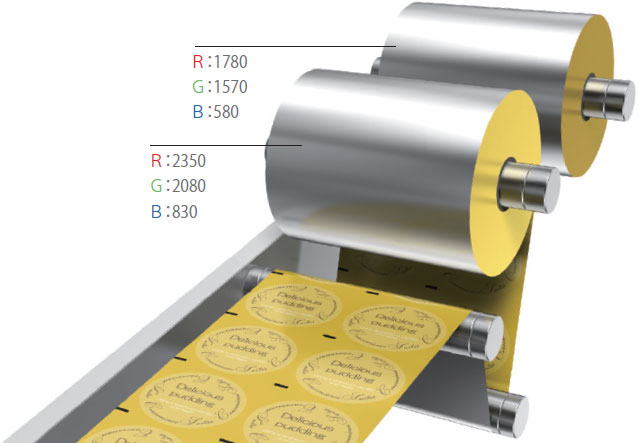
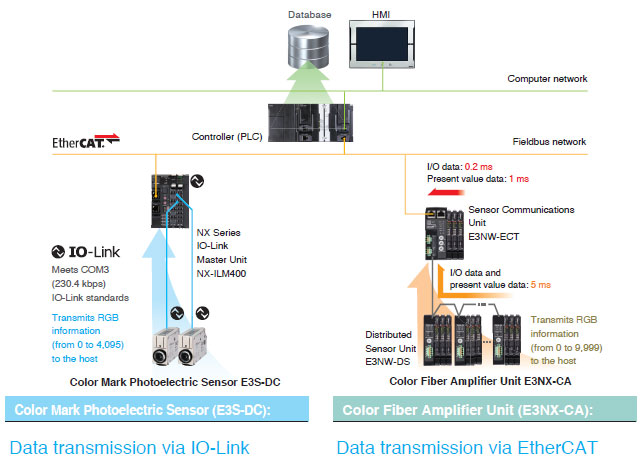
Visualization of Color Variation RGB Data Transmission Function
RGB information for color marks and backgrounds for each lot is transmitted to a host and quantified. This information is then managed in a database, making it possible to set optimal thresholds and identify causes quickly if a problem occurs.
During commissioning
Until now, setting the threshold during commissioning required the knowledge of an expert. Now it is possible to get the optimal setting just by registering the RGB ratio of the packaging.
During maintenance
When the Sensor makes false detection, values can be checked to determine whether color variation from lot to lot in packaging material has occurred, making it easy to identify what has caused a problem and to then resolve it.
Tags: E3NX-CA